
Drainage Solutions
Standing Water in the Yard? We Fix That.
French drains, surface drains, downspout extensions, and dry creek beds for homeowners in Waxhaw, Marvin, Weddington, and south Charlotte. We find where the water is coming from and give it somewhere to go.
The Difference
From Buried Drain Line to Finished Creek Bed
The pipe does the work underground. The stone on top is what you actually live with — so we finish the job properly rather than leaving you a gravel scar.
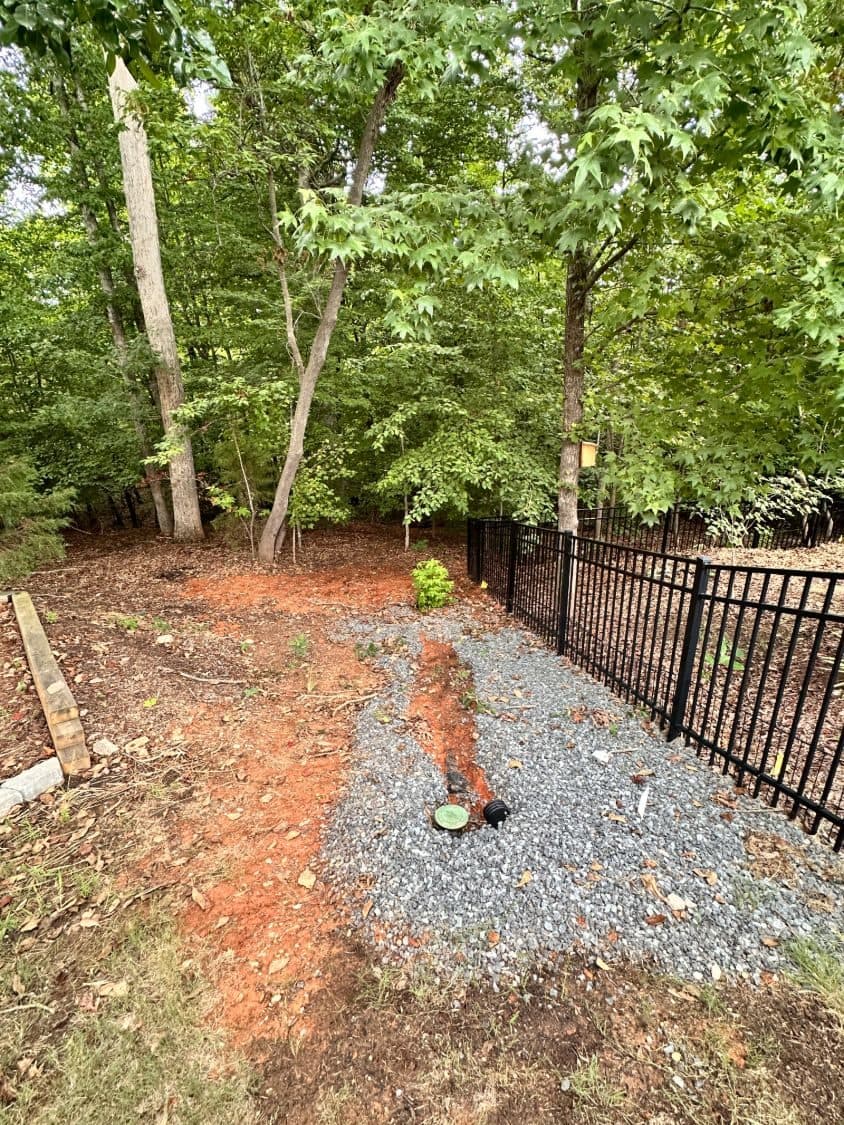 Before
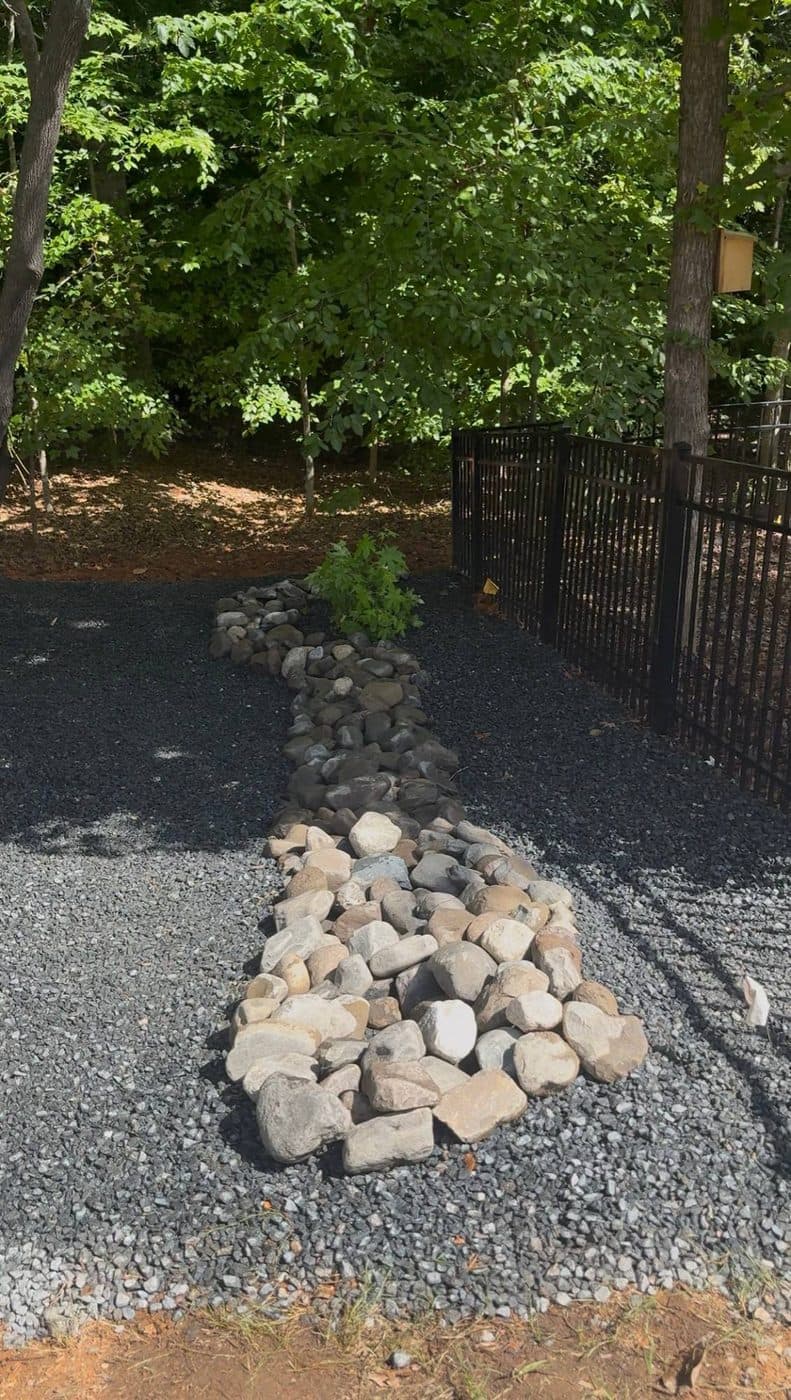 After
AfterDo You Have a Problem?
Signs Your Yard Needs Drainage
If more than one of these sounds like your property, water is not leaving the way it should.
- Water stands in the same spot for a day or more after rain
- A patch of lawn stays soggy and the grass is thin or gone
- Water runs toward the house instead of away from it
- Mulch washes out of the beds every heavy storm
- Gutters discharge right at the foundation
- Soil is visibly eroding on a slope
- The crawl space or basement smells damp
- Moss or algae is taking over a shaded, wet area
Recognise two or more? Send us a photo of where the water sits and we will tell you what it needs — no charge, no pressure.
What We Install
The Right Fix for the Actual Problem
Not every wet yard needs a full drain line. We quote what the property needs, not what sells best.
French Drains
A perforated pipe set in gravel below grade that collects water out of the soil and carries it somewhere it can safely go. The standard fix for ground that stays saturated long after the rain stops.
Surface & Catch Basin Drains
Grated inlets set into the low points that take standing water off the surface fast, piped out to a proper discharge point instead of sitting in the lawn.
Downspout Extensions
Roof water buried and carried well clear of the foundation. Often the cheapest fix on the list, and frequently the one that solves the whole problem.
Dry Creek Beds
A stone channel that moves water across the property and looks like it belongs there. Does the job of a drain and reads as a landscape feature.
Grading & Swales
Reshaping the ground so water runs away from the house instead of toward it. Sometimes the right answer is the dirt, not the pipe.
Erosion Control
Stabilising slopes and washed-out areas with stone, plantings, or structure so the soil stops moving every time it storms.
How It Works
What the Job Actually Involves
Most people have never seen a drain go in. Here is the whole process, including the parts that are easy to skip and shouldn't be.
- 01
We walk the property
We look at where the water comes from, where it collects, and where it can realistically be sent. Ideally we see it during or just after a rain.
- 02
We tell you what it needs
A written quote with the approach and the price. If the fix is a cheap downspout extension rather than a full drain line, we will say so.
- 03
We dig and install
Trenching, filter fabric, washed stone, and pipe set with proper fall to a discharge point that works.
- 04
We put the yard back
Backfilled, graded, and cleaned up. The yard should look like we were never there, apart from the part that now stays dry.
Questions
Drainage, Answered Straight
What does a French drain cost?
It depends on the length of the run, how deep it has to go, and where the water can be discharged. Nationally most yard drainage projects land somewhere between $3,000 and $4,000, though small fixes come in well under that and large or complicated jobs run higher. We quote every job after seeing the property — no guessing over the phone.
How long does a drainage job take?
Most residential drainage installs are a one to three day job depending on the length of the run and how much access the equipment has. We give you a realistic window with the quote.
Will it wreck my lawn?
There is a trench while we work, and it is not pretty. But we backfill, re-grade, and clean up as part of the job. Within a season you should not be able to tell where the line runs.
Can you work in winter?
Yes — and winter is often the better time. The ground is bare, plants are dormant, and there is far less to disturb or work around. Drainage is one of the few landscaping jobs that does not need to wait for spring.
Where does the water actually go?
To a legal, sensible discharge point — daylighting at a lower elevation on the property, a drainage easement, or a dry well where that is the right answer. We work that out before we quote, because a drain that has nowhere to discharge is not a drain.
Do I need a permit?
Most straightforward residential yard drainage does not require a permit, but it varies by municipality and by what we are tying into. If a job needs one we will tell you before we start.
Get Started
Tired of the Same Puddle Every Storm?
Send us a photo of where the water sits and we will tell you what it needs. Free quotes, no contracts, no pressure.